Sussex Mindfulness Centre logo
NHS Sussex Partnership - NHS Foundation Trust logo

Author: support

  • When times get hard – effective leaders practice compassion

    When times get hard – effective leaders practice compassion

    Compassion is not a virtue – it is a commitment. It’s not something we have or don’t have – it’s something we choose to practice.

    There is no escaping the NHS crisis narrative at the moment. It includes a cocktail of the enduring legacy of Covid, high levels of stress and burnout for staff resulting in people leaving the NHS, alongside pay disputes and industrial action. The cost of living crisis is also taking its toll, increasing demand on social care and the third sector and putting more pressure on already overstretched services and capacity.  These are complex issues with no miracle solutions. 

    At a time of crisis, it can feel that all our energy is taken up firefighting; when these are the times that compassion and its positive effects are needed most. Despite the obvious pressures, it is clear that the NHS workforce embodies the core value of compassionate care for patients. In turn, our leaders need to sustain a workplace culture of compassionate so that staff feel listened to, understood and helped to maintain high quality care. 

    Research shows that compassion gets embedded in an organisation when there is buy-in and modelling from the top. Positive emotion in leaders is associated with more positive emotion in staff, enhanced team performance and higher rates of prosocial behaviour. And, when nurses are spoken to harshly, for example, by a supervisor, this affects their subsequent interaction with patients over the course of a day. So, it’s no exaggeration to say that compassion demonstrated by leaders will have a significant effect on a patient’s experience and outcomes. 

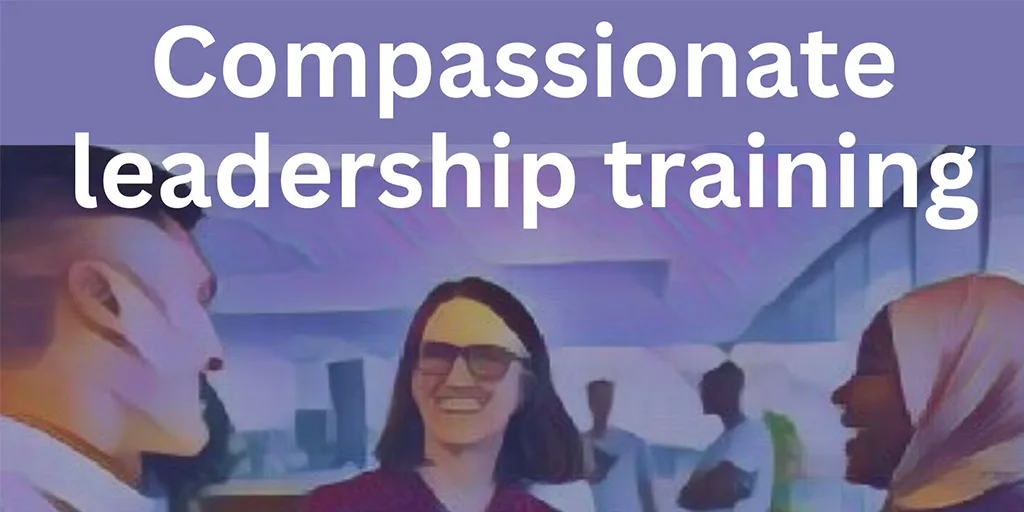
    “Compassion is not a virtue – it is a commitment,” says Brene Brown. “It’s not something we have or don’t have – it’s something we choose to practice”. So, with this in mind Dr Robert Marx and Professor Clara Strauss from the Sussex Mindfulness Centre have created a six-week Compassionate Leadership training programme for NHS and social care staff. This experiential course explores compassion as kindness directed towards suffering – our own and others – and is based on Professor Michael West’s book Compassionate Leadership: Sustaining Wisdom, Humanity and Presence in Health and Social Care 2021. 

    In the course, we focus on cultivating self-compassion and what it means to be a compassionate leader. The course draws on mindfulness practice, research and the recognition that our vulnerability as humans allow us to connect, listen to the challenges of others and be helpful. At the heart of compassionate leadership is understanding the difficulties staff experience, through collaboration and fostering collective responsibility for complex challenges.

    If you are interested in the training you can find out more about it here.

  • New mindfulness course for Black, Asian and People of Colour

    New mindfulness course for Black, Asian and People of Colour

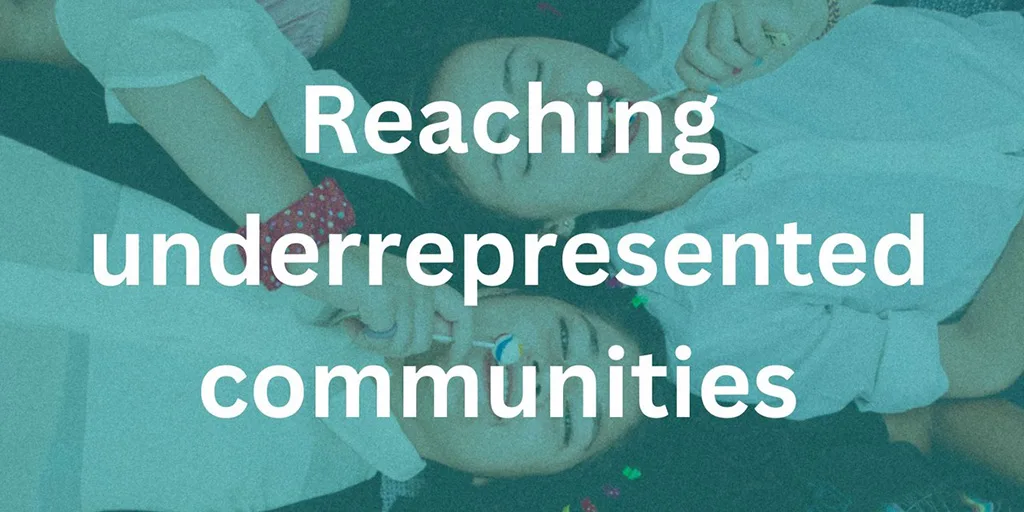
    We are making mindfulness training available to diverse communities that are underrepresented within mainstream NHS services.

    At the end of last year, with local organisation MindOut, we ran the eight-week mindfulness course for LGBTQ participants. At the beginning of this year, we started a ten-week trauma-informed adapted course for asylum seekers and refugees, in collaboration with local organisations, particularly the Network of International Women in Brighton & Hove.

    And in the Spring, we plan to run a culturally relevant version of mindfulness-based inclusion training for Black, Asian and People of Colour communities starting with a taster on 29 March. Find out more and how to book this free course here.  And if you know anybody who might be interested please let them know. 

    We’re also running further courses for asylum seekers and refugees, and for people from the LGBTQ community.

    In each case the curricula and the programme is adapted and responsive to the needs of participants. It’s early days yet, but so far we are receiving hugely positive feedback from participants about their experiences of these courses.

    We will be evaluating the impact of these courses. However, encouraged by the initial feedback and sensing unmet demand, we are keen to partner with organisations from these, and other underrepresented communities, to run further mindfulness courses.   

    If you are interested in working with us to reach underrepresented communities please be in touch with us at smc@spft.nhs.uk. 

  • “How mindfulness helps me” by Robert Marx

    “How mindfulness helps me” by Robert Marx

    Quite often we promote mindfulness as a way of feeling less stressed, less depressed, less anxious, less self-punishing.

    We gather ourselves around the breath, pause and let our parasympathetic nervous system activate, returning to being the self that we like being, the one that can be more grounded, calmer, kinder. I can breathe into that gnarly little knot I have become in that moment of aggravation and open to a bigger space – and feel better.

    But actually, I also appreciate the practice for opening up a space that lets me feel worse. In my haze of avoidance and reactivity, it is easy to find that comfortable ground of feeling I am right, that they wronged me, that if someone else behaved more decently or competently, the world would be a better place.  And in the moment when I occasionally catch myself seduced by this kind of self-righteous self-justification, and sit with it, and feel into it, I don’t feel better, I feel worse. I see more clearly what a schmuck I am in that moment, how impatient and intolerant I can be, and how after all this practice, it doesn’t seem to get much better. As Ryokan says: “Last year a foolish monk. This year, no change.”

    This is not to berate myself for being a bad person. I do not think I am not a bad person, or a good person, for that matter.  I am a flawed human who now and then catches my breath on the wind of reactivity and blame and sees it. Seeing how I create the conditions for my own unhappiness, for my own sense of separateness from the world, my own longing and irritability. And in that seeing, without for a moment blaming someone else, or myself, I can sit in the full catastrophe, and not make it worse. Perhaps I can even use it to connect with my fellow humans in the shared but tragic predicament in which we find ourselves of managing our unbearable feelings by protecting, constricting, fixing, projecting, attacking.

    In that moment, there is a glimpse of a more open vulnerability in which I can slow down and let in the world.

  • New Year: New You? New mindfulness courses for SPFT staff

    “The mindfulness course provided me with a renewed sense of wellbeing and connection.”

    Many of us make resolutions in the New Year, and forget them by the end of January. Mostly our resolutions aim to improve ourselves, and our lives… But it can be difficult to keep up the momentum, when the usual challenges of daily living get in the way. 

    If your work is stressful, coming back after a break can be especially challenging. You may be aware that emails will have continued to land in your in-box… and it’s probably a time of the year when your services are more in demand. 

    Instead of trying to improve yourself, you might be better off taking steps to improve your wellbeing. As a member of staff for the Sussex Partnership or if you are working for the health and local authority social care staff in the Sussex area, you have free access to a mindfulness course that can help you develop skills to strengthen your resilience and enable you to find calm amidst the chaos. 

    A mindfulness course won’t change your situation, but it might give you a different vantage point from which to view it. Participants completing our mindfulness courses at the end of last year, recommend them to colleagues. 

    “Since doing the course I have been able to meet myself in a more genuine way. This has allowed me to approach my experience with less judgement, and give myself what I need in times of great stress or suffering. 

    I will practice mindfulness more frequently and particularly apply the teachings from the course. It has helped me to face challenges with kindness, and a more positive perspective, once I’ve allowed space to acknowledge that I am struggling. 

    This experience has helped me on a personal level, and I have found a new way to connect with clients and to be able to support them too.”

    Andreas Triantafyllou, Assistant Psychologist 

    “The mindfulness course provided me with a renewed sense of wellbeing and connection. Through the course I found the weekly two-hour session became a valued part of my routine. The space for being in the present, with others and using meditation and other mindful exercises has had a positive impact. I aim to keep a meditation practice going and feel pleased to have had this experience and the guidance from the teacher, Taravajra. I would recommend engaging with mindfulness to any of my colleagues.”

    Paul Bulling, Senior Social Worker, 
    Brighton & Hove City Council & Sussex Partnership NHS Foundation Trust

    There are new courses for SPFT staff starting on Monday 23 January, Wednesday 25 and Friday 27 January and Thursday 2 February. Find out more and register here.  Also there are two new courses starting under the Staff in Mind programme, for all health and local authority social care staff in the Sussex area and NHS staff in Hampshire (CAMHS). Find out more here.

  • Workshops at Spring conference: “What is mindful culture?”

    We have a varied and engaging set of workshops for people attending our Spring conference on 10 March 2023. Supporting the conference theme around mindful culture, we are happy to announce the following workshops.  

    Exploring mindfulness based inclusion training with Dean Francis

    Join us as we come together to look at what mindfulness can bring to the table around social inclusion and what an awareness of our social context can bring to our practice. We will explore how our differences can unify us rather than separate us and how mindfulness can be presented to diverse groups and individuals in a way that is culturally appropriate. 

    Together we will also explore some of the obstacles to the truth of our interconnectedness, deep kinship, common ground, and humanity. So please do join us in creating this unique, safe, and courageous space to practice, share, discuss, learn, and feel how social mindfulness may facilitate change in a way that benefits all of us.

    This session is for mindfulness teachers and practitioners who are interested in embracing the lived experience of marginalised groups in society.

    Dean is the Equality Diversity Inclusion (EDI) Consultant at the Sussex Mindfulness Centre. He is also the co-creator of the first researched UK African Centred Mindfulness Training Programme for black people and people of colour, a Trustee and co-lead of EDI at BAMBA and co-founder of the Urban Mindfulness Foundation. 

    Mindful Calligraphy by Juan Du

    Juan Du will be leading a session on mindful calligraphy. Juan is an accredited integrative psychotherapist and mindfulness teacher.  During her doctorate training in Counselling Psychology and Psychotherapy, Juan developed Chinese Calligraphy Enhanced Therapy (CCET) as an innovative integrative approach which also draws on cognitive theory, Eastern Philosophy, mindfulness theory and psychoanalytic theory. Juan’s passion for working and researching in the mental health field is to promote mental health equality and encourage clinicians to think creatively and develop culturally sensitive approaches to bridging people from minority background access to psychological therapy.  All the materials will be provided and this workshop is suitable for people without experience in mindful calligraphy.

    Juan is registered with the United Kingdom Council for Psychotherapy (UKCP) as an accredited clinical member, as well as a registered individual member with the British Association for Counselling and Psychotherapy (BACP).  She is also a committee member for the British Psychological Society (BPS) Psychotherapy Section.

    Mindfulness-based relapse prevention by Nicky Mouat and Jenny Nicholson 

    Mindfulness can give us perspective and choice when it comes to engaging in addictive behaviours. In this workshop we explore practices from two mindfulness-based approaches for working with addictive behaviours; Mindfulness Based Relapse Prevention and Mindfulness in Early Addiction Recovery. In addition, we hope to give participants a broad understanding of why mindfulness can be so helpful in this field, as well as point to further information and resources. 

    Nicky is a mental health nurse, mindfulness teacher, trainer and supervisor. She has 30 years experience working in both Addictions and Mental Health in the NHS and Charity sector both in the UK and Australia. She has been working with mindfulness for addictions since 2015, and is a teacher, trainer and supervisor for the 8 week adapted course Mindfulness Based Relapse Prevention.

    Jenny is a mental health nurse, mindfulness teacher and specialises in addiction.  She has an MSc in Psychology (Mindfulness-Based Cognitive Therapies Research and Practice) and a Post-Graduate Certificate in Addictions Psychology and Counselling from LSBU.

    A widening field: Mindfulness as social practice by Rosalie Dores

    In increasingly challenging times how can the culture of mindfulness-based interventions widen from an over-emphasis on the individual to include the greater world in which we live? In this workshop we will explore the potential of mindfulness as a social practice, one where the focus widens from a personal ‘I’ to an interpersonal ‘we’. To facilitate this exploration we will practice Insight Dialogue (relational meditation) in small and large groups.

    Rosalie is a mindfulness teacher and supervisor. She has had a committed practice since 1992. She is an Insight Dialogue retreat teacher and is currently co-teaching Turning Towards The Climate Emergency, a course that integrates Active Hope and Insight Dialogue. Rosalie is dedicated to offering teachings that engage at the interface of ancient wisdom and the challenges of the our modern world.

    Mindfulness courses for young people by Clara Strauss and Ruth Sequeira

    This workshop explores the research findings and implications for practice. It will start with a brief presentation about what we know from research about the safety and effectiveness of teaching mindfulness to young people in a range of settings, including our local experiences of teaching mindfulness to young people. Following these brief presentations, we will open up the workshop for a wider discussion on implications of research findings and local experience for practice, and how we can best ensure that the mindfulness courses we offer to young people have the best chance of being safe and helpful.

    Clara is the Research Lead for the Sussex Mindfulness Centre. She is a consultant clinical psychologist, mindfulness teacher and clinical researcher. In her research, Clara is particularly interested in developing and evaluating new forms of mindfulness-based intervention (MBI), especially for those people who may not be willing or able to access MBCT. Ruth is a BAMBA registered mindfulness teacher, supervisor & teacher trainer.

    Poetry and mindful reflection by Hazel Ragoonanan and Heather Ball

    This workshop explores how we can use poetry to support mindful awareness, and step into Being mode. Poems will shared in the following areas to support practice and reflection: 
    •    The natural environment
    •    Compassion and kindness
    •    Being in the present moment

    To find out more about the conference, the key note speakers and talks, and how to book visit our conference page.

  • Desperately seeking healthcare staff with experience of mindfulness

    MINDARISE is a new research programme that is looking to recruit healthcare staff with any experience of mindfulness (at any level and through any format).

    Examples might include using a digital app like Headspace, attending a short mindfulness course, or lone practices when out and about.  

    Whatever your experience of mindfulness, it is invaluable to our research and could ultimately aid recommendations that influence policy on mental health and well-being support for healthcare staff.  

    By joining this study, you will be contributing to active research in an understudied area. This could lead to future recommendations that influence policy and further help to support your NHS colleagues. You will also be offered the chance to enter a prize draw and win one of five £50 Amazon gift vouchers (conditional on completing all three questionnaires).  

    You can find more information on this study here

    For more information please contact:  askaboutresearch@spft.nhs.uk