Sussex Mindfulness Centre logo
NHS Sussex Partnership - NHS Foundation Trust logo

Tag: mindfulness course

  • Wellbeing course for migrants

    Wellbeing course for migrants

    22 July 2025 at 10:00 to 12:00

    Learn skills to manage stress and improve life. Join this free ten-week programme for migrants. The trauma-informed and culturally sensitive course will be held outdoors in a private garden. The course sessions are on Tuesdays from 10am to 12 midday, from 22 July until 30 September 2025 (no session on 23 September).

    You can secure your place by filling in this short application form.

    Line drawing of three people at a retreat

    Overview

    The course includes activities designed to promote wellbeing, and reduce anxiety and stress. These activies include:

    • Learning simple skills to help calm the mind
    • Gentle movement and stretching exercises (that can be adapted for everyone)
    • Using art and and creativity (no experience needed)
    • An opportunity to practice English. The course is taught in plain simple English using visual prompts (fluency is not necessary)

    The benefits of doing the course include:

    • Understanding how the mind works
    • Being able to cope better in difficult situations
    • Shared sense of solidarity and community

    Location

    The location will be in an outdoors in a secluded garden. You’ll be sent details of how to get there once you enrol. We will be able to supply bus passes for people who need to travel.

    Background to the course

    This course enables participants to access the benefits of mindfulness in a way that is is a trauma-informed and culturally sensitive. The Mindfulness Across Borders curriculum was created by Ariana Faris and Sheila Webb with funding from the Oxford Mindfulness Foundation. The design is based on a project piloting courses in trauma-adapted and culturally-sensitive Mindfulness Based Cognitive Therapy for refugee and asylum-seeking communities in London, Cardiff and Brighton. The curriculum was co-produced with refugees in these cities. It is therefore sensitive to the experience and traumas that individuals may have faced.

    The Sussex Mindfulness Centre is offering this course free, as part of its efforts to reach underrepresented communities.

    Who is the course for?

    All refugees and people seeking asylum in the UK, whatever your current status, are very welcome. This course is open to men and women migrants and other people who identify with refugees and people seeking asylum.

    Teachers

    Robert Marx

    Photo of Robert Marx

    Robert is Co-Lead (training) for the Sussex Mindfulness Centre. He is a consultant clinical psychologist and has been involved in running mindfulness groups for staff and patients since 2006. He also trains and supervises others doing mindfulness work. He is interested in relational mindfulness and in adaptations of mindfulness-based interventions using compassion practices.

    Julia Powell

    Julia Powell

    Julia trained to be a mindfulness teacher in 2017, after a career in international development, social justice and human rights, including the rights of people seeking asylum in the UK. Julia runs mindfulness courses and coaching for the public and for refugees and asylum seekers.

    Course format

    The session provides a range of activities and each session is different. Generally, they start with some gentle movement or stretching exercises. The first four sessions are designed so participants can get an idea of what happens, and decide if the course is for them. From session five, the course is closed to newcomers to create a more intimate and safe space.

    There is a tea break in the middle of the sessions.

    How to apply

    The course is free. If you would like to apply please fill in this short application form here. Or if you want more information please email Lara at spft.smc@nhs.net.

  • Wellbeing course for women migrants

    Wellbeing course for women migrants

    6 May 2025 at 10:00 to 12:00

    Learn skills to manage stress and improve life. Join this free ten-week programme for women migrants. The trauma-informed and culturally sensitive course will be held outdoors in a beautiful garden. The course sessions are on Tuesdays from 6 May 2025 until 15 July 2025. This course may be full, but you can fill in the form to join the waitlist, in case someone drops out.

    You can join the waitlist by filling in this short application form.

    Threline drawing of three women

    Overview

    The course includes activities designed to promote wellbeing, and reduce anxiety and stress. These activies include:

    • Learning simple skills to help calm the mind
    • Gentle movement and stretching exercises (that can be adapted for everyone)
    • Using art and and creativity (no experience needed)
    • An opportunity to practice English. The course is taught in plain simple English using visual prompts (fluency is not necessary)

    The benefits of doing the course include:

    • Understanding how the mind works
    • Being able to cope better in difficult situations
    • Shared sense of solidarity and community

    Location

    The location is a gorgeous and secluded garden in Kemptown. You’ll be sent details of how to get there once you enrol. We will be able to supply bus passes for people who need to travel.

    Background to the course

    This course enables women to access the benefits of mindfulness in a way that is is a trauma-informed and culturally sensitive. The Mindfulness Across Borders curriculum was created by Ariana Faris and Sheila Webb with funding from the Oxford Mindfulness Foundation. The design is based on a project piloting courses in trauma-adapted and culturally-sensitive Mindfulness Based Cognitive Therapy for refugee and asylum-seeking communities in London, Cardiff and Brighton. The curriculum was co-produced with refugees in these cities. It is therefore sensitive to the experience and traumas that individuals may have faced.

    The Sussex Mindfulness Centre is offering this course free, as part of its efforts to reach underrepresented communities. We are partnering with the Network of International Women for Brighton and Hove.

    Teachers

    Lana Jackson

    Lana Jackson

    Lana is a senior clinical psychologist, yoga therapist, and mindfulness teacher with Sussex Mindfulness Centre. She has a special interest in nature-connection and trauma-informed therapy and practice with children, young people and adults.

    Julia Powell

    Julia Powell

    Julia trained to be a mindfulness teacher in 2017, after a career in international development, social justice and human rights, including refugee rights. Julia runs trauma-informed mindfulness courses and coaching for the public and for refugees and asylum seekers.

    Course format

    The session provides a range of activities and each session is different. Generally, they start with some gentle movement or stretching exercises. The first four sessions are designed so participants can get an idea of what happens, and decide if the course is for them. From session five, the course is closed to newcomers to create a more intimate and safe space.

    There is a tea break in the middle of the sessions.

    How to apply

    The course is free. Please fill in this short form, or email Lara at spft.smc@nhs.net.

  • Finding Peace in a Frantic World – Thursday lunchtimes

    Finding Peace in a Frantic World – Thursday lunchtimes

    23 April at 13:00 to 14:00

    Eight-week course following the programme outlined in the bestselling book of the same name. Largely self-directed the course includes three online live sessions. The course sessions are online on Thursdays, at 1pm for one hour over the eight weeks of the course. The online sessions are on: 23 April, 21 May and 18 June 2026.

    Overview

    This is an eight-week, largely self-directed, mindfulness course using as the basis, Mark Williams and Danny Penman’s best-selling book Mindfulness: Guide to Finding Peace in a Frantic World.

    You will be supported by experienced teacher Ruth Sequeira in three online sessions at the beginning, middle and end of the eight-week programme. For most of the programme, you will follow the exercises in the book on your own. You will need to set aside around half-an-hour a day from 23 April to 18 June 2026 for this.

    Who is the course for?

    This course offers a highly accessible, engaging and practical introduction to mindfulness. It is suitable for beginners who want to learn flexibly.

    Teacher – Ruth Sequeira

    Ruth Sequeira

    Ruth Sequeira is as senior trainer, supervisor and mindfulness teacher for the Sussex Mindfulness Centre. She is also a psychological therapist and the Mindfulness and Compassion Training and Retreat Lead at the Mindfulness Network. Ruth has a history of working in mental health services and until recently worked as a clinical lead in the Child & Adolescent Mental Health Service (CAMHS) in Sussex. Ruth has a longstanding interest in mindfulness, meditation and movement, and is passionate about increasing access to mindfulness courses in different populations.

    Course format

    The online session dates for Finding Peace in a Frantic World are:

    1. Thursday, 23 April 2026, from 1pm to 2pm
    2. Thursday, 21 May 2026, from 1pm to 2pm
    3. Thursday, 18 June 2026, from 1pm to 2pm

    Session 1: In the first session we will explore what is mindfulness? You will be guided in how to use the book through the eight week course.

    Session 2: In session two, we will explore what you are learning from the programme? We will identify any challenges you are facing, and explore how we can overcome these?

    Session 3: In the last session, we identify what has been most helpful for you and what you most want to remember? What learning you will take away?

    Course costs and how to book

    The course costs £60 (or £50 for Early Bird bookings) and you will need to buy the book. You can book here.

  • Miracles of mindfulness; working with women refugees

    Miracles of mindfulness; working with women refugees

    Julia Powell writes about her recent humbling experience co-leading mindfulness for groups of women refugees, asylum seekers and migrants…

    Lana Jackson and I have just finished co-leading our second ten-week mindfulness course for women refugees. We’ve been using the trauma-informed Mindfulness Across Borders curriculum developed by Ariana Faris and Sheila Webb and funded by the Oxford Mindfulness Foundation. The initiative is part of the Sussex Mindfulness Centre’s effort to reach underrepresented communities.

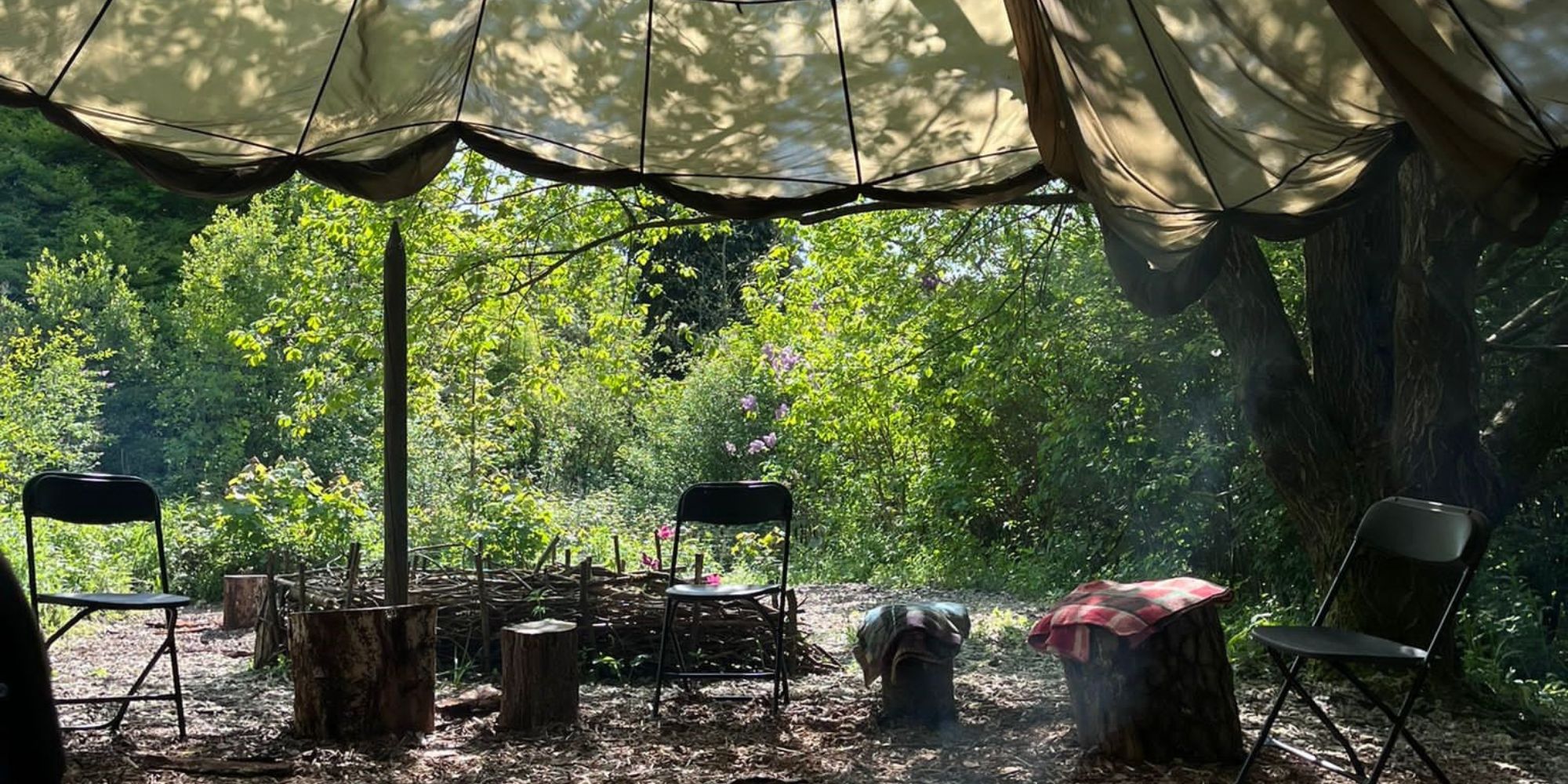
    With Lana’s encouragement and enthusiasm for eco-therapy, we ran this second course outdoors, in a secluded garden in Stanmer Park, Brighton. The setting was perfect. We had a fire circle with logs to sit on, and were sheltered under a parachute that was draped over trees, in case it rained.

    At first, it was a challenge to attract participants to what may be an alien concept in some cultures. In the promotional material we minimised ‘mindfulness’ and highlighted the benefits articulated by previous participants of courses in Cardiff and London. Following lots of support from local refugee organisations, both courses were eventually oversubscribed.

    We earned the confidence of the women participants early on by responding to their needs and adapting the curriculum accordingly. For example, as many of the women are dealing with high levels of anxiety they requested more mindful movement. Physical activity at the beginning of each session helped them feel more grounded, and more able to participate in the rest of the session. Realising that they were co-creators in the course created trust, a sense of belonging and ownership.

    We kept the venues secret to protect our participants from the sorts of hate crimes that recent arrivals to the UK have been subject to. Many of the participants will have left war or persecution behind them, and some may have faced hostility in their new host communities. Many live in poor temporary accommodation, with lives on hold as they await long-delayed decisions on asylum applications and are prohibited from working in the meantime. As I write, I am contacted by one distressed former participant who, with her husband and children fears imminent eviction.

    So, in the face of such adversity you may wonder how mindfulness could possibly help? Obviously, our programme doesn’t address urgent and practical challenges like becoming homeless. And in such cases, of course it is necessary to ‘do’ something. Not simply ‘be’ with the uncertainty.

    But, an excellent example of the power of mindfulness came a few weeks ago. One participant woke up to discover rain pouring through her ceiling into her bedroom during the recent heavy rains. Water flooded into all of the rooms of her small flat. She got a sudden rush of emotion as she realised what was happening. Then she remembered the ‘breathing space’ learnt in previous sessions. She actually referred to the little credit card-sized prompt we had given her. She took a breathing space, remained calm, alerted the landlord, and phoned a friend. She gathered herself up, left the disaster that was her home and came to our weekly session in the park, albeit a little late!

    We were very pleasantly surprised by the wholehearted engagement of the women, right from the start. The insights they shared showed how much they learned. Participants talked about the value of the programme.

    “Mindfulness is sunrise because it’s like a new day, it’s hope, it’s clear.”

    Woman on the mindfulness course

    Another participant said:

    “When I do mindfulness, I feel like I’m flying. It’s very powerful, like flying, you feel like you can run, you can learn.”

    Several women said they felt more confident, finding ways to be alongside difficulties, and learning to appreciate the little things, the sun and the breeze. Women talked about being more in tune with their bodies, more connected, more accepting. One participant recognised that pain in her body was specific and localised, and that the rest of her body felt fine. This was a revelation and released her from the idea that she was in pain.

    Love was a recurring theme in our one-word feedback at the end of the sessions. And the sense of connection, community and solidarity with others was ever present.

    I felt humbled to be with these women who have such challenging lives, who somehow carved out a little time for learning something entirely new, and for being open to the little miracles of mindfulness.

    Many thanks to interns, Susie Myszynska and Georgia Sawyer, for all their dedicated support with the sessions. Also thanks to Ariana Faris who provided hugely insightful and helpful supervision.