
Sussex Mindfulness Centre logo
NHS Sussex Partnership - NHS Foundation Trust logo

Tag: personal

  • Trauma-informed mindful movement workshop – Day two

    Trauma-informed mindful movement workshop – Day two

    1 October at 10:00 to 16:00

    Building on the basic principles of safe movement that we explored in Day 1, this workshop will help you to identify the intentions and specific needs of your clients and support you to create a safe, balanced, accessible and engaging programme.

    What is covered?

    This online day intends to offer a space to discuss and create a sequence of mindful movements that will suit your population, particularly if standard mindful movement does not feel appropriate for your groups. For example, if:

    • Your clinical participants have specific needs or movement limitations
    • You have a broad range of movement abilities in your group
    • Your participants don’t move easily/don’t move generally in their lives

    We will identify the intentions and specific learning to meet your clients’ needs, and support you to create a safe, balanced, accessible and engaging programme.

    While the teacher has some clinical experience, she may not have full knowledge of the issues affecting the people you may be working with. Your own understanding of their needs and challenges accessing mindful movement will be crucial in this process.

    Who is this for?

    This workshop is suitable for mindfulness teachers working in both clinical settings and with the general public.

    Where?

    The workshop will be online, and you will receive your link after you have booked.

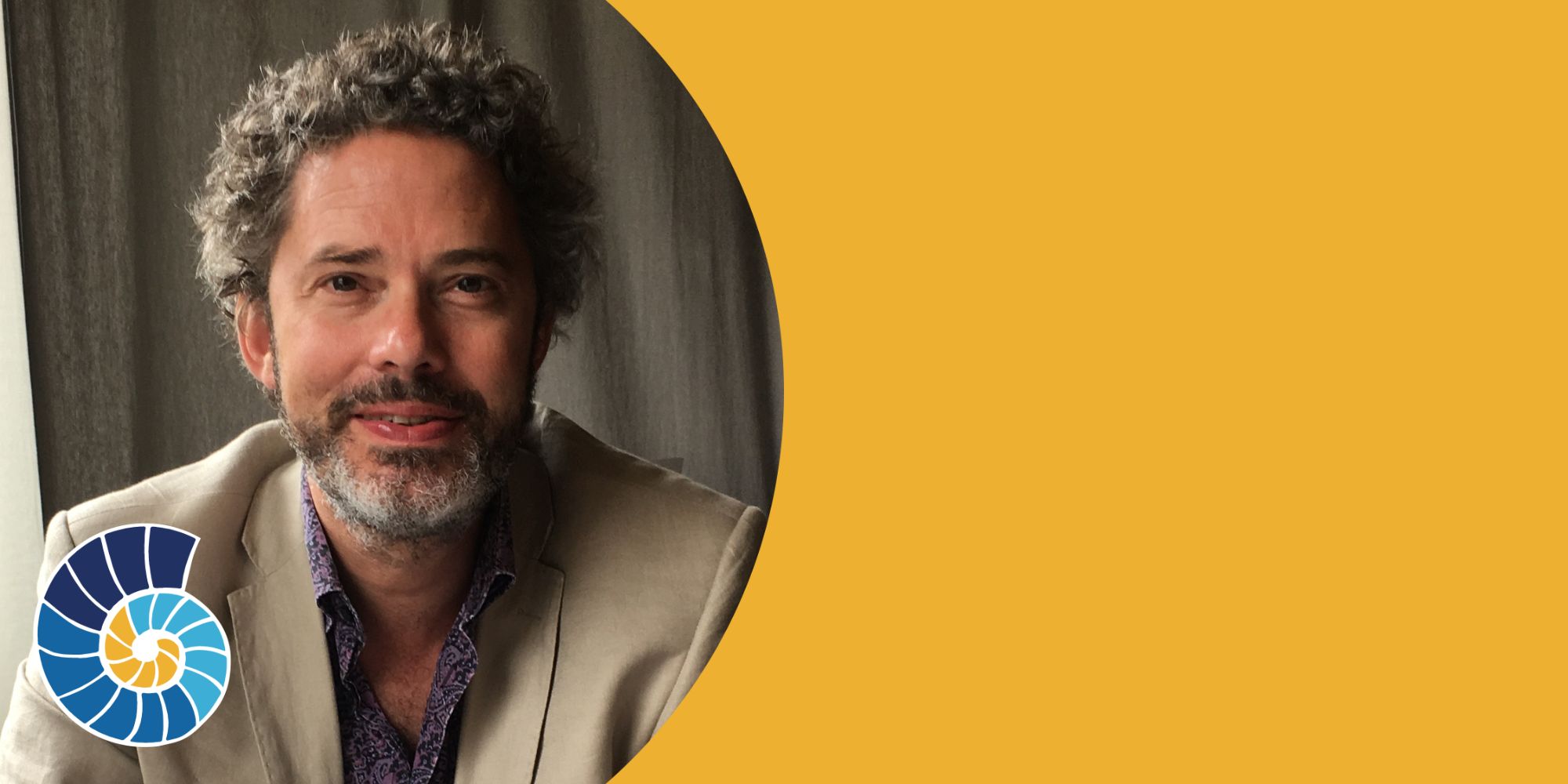
    The facilitator – Sarah Silverton

    Sarah trained as an occupational therapist and has been working in mental health services in the NHS and in Social Services for more than twenty years. Sarah trained as a counsellor to Master’s level. Sarah has a long-standing passion for movement practices and runs mindful movement retreats three times each year, online and at the Trigonos Retreat in North Wales.

    Sarah Silverton

    In the mid 1990’s Sarah was trained by Mark Williams to teach mindfulness. Sarah also studied at the Center for Mindfulness, Massachusetts in 1999 with Melissa Blacker, Jon Kabat-Zinn and Florence Meleo-Meyer among others.  Sarah was a member of the core teaching and training team at the Centre for Mindfulness Research and Practice (CMRP) at Bangor University since it was established in 2001 for 10 years.

    Sarah has published The Mindfulness Breakthrough, Watkins, 2012 reprinted as The Mindfulness Key in 2016, and Mindfulness and the Transformation of Despair, Williams, Fennell, Barnhofer, Crane and Silverton, Guilford, 2015 printed in paperback in 2017, as Mindfulness-Based Cognitive Therapy with People at Risk of Suicide.

    Certificate

    If you would like a certificate of attendance, you can request this after the event.

    Booking

    The cost of the workshop is £25. You can book here below.

  • Trauma-informed mindful movement workshop

    Trauma-informed mindful movement workshop

    16 July at 09:30 to 16:30

    In this day long workshop, we will join together in a spirit of connection and collaboration to explore the various ways in which our personal meditation practice can open to meet the challenges of the wider world, of which we are a part.

    What is covered?

    Foundations of mindful movement will include safety principles, intentions and offering guidance with graded movement. We will draw on the work of environmental activist and systems scholar Joanna Macy, as well as interpersonal and personal mindfulness practice. Building understanding, confidence and skills to bring awareness of moving mindfully to your specific population and setting.

    Who is this for?

    This workshop is suitable for mindfulness teachers working in clinical settings and with the general public.

    Where?

    The workshop will be online, and you will receive your link after you have booked.

    The facilitator – Sarah Silverton

    Sarah trained as an occupational therapist and has been working in mental health services in the NHS and in Social Services for more than 20 years. Sarah trained as a counsellor to master’s level.

    Sarah Silverton

    Sarah has a long-standing passion for movement practices and runs mindful movement retreats three times each year, online and at Trigonos, North Wales. She has practiced pilates and yoga for many years.

    In the mid 1990’s Sarah was introduced to mindfulness and was trained by Mark Williams to teach mindfulness. Sarah also studied at the Centre for Mindfulness, Massachusetts in 1999 with Melissa Blacker, Jon Kabat-Zinn and Florence Meleo-Meyer amongst others.  Sarah was a member of the core teaching and training team at the Centre for Mindfulness Research and Practice (CMRP) at Bangor University since it was established in 2001 for 10 years.

    Sarah has published The Mindfulness Breakthrough, Watkins, 2012 reprinted as The Mindfulness Key in 2016 and Mindfulness and the Transformation of Despair, Williams, Fennell, Barnhofer, Crane and Silverton, Guilford, 2015 printed in paperback in 2017 as Mindfulness-Based Cognitive Therapy with People at Risk of Suicide. She has contributed to a number of academic papers.

    Certificate

    If you would like a certificate of attendance, you can request this after the event.

    Booking

    The cost of the workshop is £25. You can book here below.

  • My transformation with mindful self-compassion

    My transformation with mindful self-compassion

    Indi, Quality Improvement Advisor for Sussex Partnership NHS Foundation Trust, writes from the heart about her mindfulness journey and her more recent experience of Sussex Mindfulness Centre’s eight-week Mindful Self-Compassion course.

    When I learnt how to apply self compassion, it was literally transformational for me. That’s not a word I use lightly.

    Indi, Quality Improvement Advisor, Sussex Partnership NHS Foundation Trust

    I had done the standard eight-week mindfulness courses a number of times, getting different benefits each time. My meditation practice had been a constant, if somewhat inconsistent thread in my wellbeing recovery over a couple of decades. I’d worked a lot on embodying the mindfulness principles of ‘non-striving’, ‘moving towards difficulty’ and ‘allowing things to be’ as best I could, but it was the course on Mindful Self-Compassion that caused things to shift in a surprising and significant way for me.

    In my podcast which you can hear on SoundCloud here I was interviewed about my experience of the Mindful Self-Compassion course. Although it finished at the end of last year, it’s still revealing exciting layers of value for me now. I’m gliding more lightly in my life, and for someone who lives with complex PTSD and chronic physical challenges, that’s a big deal.

    The first time I was introduced to the metta bhavna (loving kindness) meditation I found it really difficult. Actually, I said I hated it, but now it’s one of my most frequently used. I’d found it so hard to extend the same loving kindness and compassion to myself that I so easily did to others. So, when I found there was a course which was all about self-compassion, I was delighted to be able to get professional support from a specialist teacher in developing that mindset.

    My initial impressions included the concern that self-compassion might be self-indulgent and feed into my strong tendency for reflection and analysis. That theory was unfounded, as I quickly learnt that in order to care most effectively for others, I needed to develop the ability to apply that to myself, authentically and more consistently.

    The teacher, Paul Johansen, modelled self-compassion in such an embodied way, it felt easy for me to learn to do that too. The science and research he shared, gave it the credibility to banish my critical thinking. And by taking what felt like a slightly radical step in committing to loving and accepting myself as my focus for eight weeks, I can honestly say it was one of the most life changing things I’ve done.

    The remaining self-deprecating thoughts have been weeded out and replaced by internal dialogue such as ‘that’s ok Indi, you’re doing your best’, ‘maybe you could rest now that you’ve noticed you’re feeling too much pain today’, I’m also declining social invitations without feeling the need to explain why.

    What’s most wonderful about embodying self-compassion congruently, is that others are reacting positively, and picking up on my compassion for them, in a way that’s embedded in empathy for our shared humanity. I’m now less in my head and more in my heart, and also less dissociated from the overwhelming sensations I’d previously tried to supress. In short, I feel a growing equilibrium as well as equanimity, whilst feeling more aligned with my values and principles. I’m allowing myself regular Epsom Salt baths and lie-ins at weekends, taking more one minute resting moments and breathing spaces throughout the day, and finding a greater capacity to enjoy my connection with nature. Oh, and there’s more tea and cake without guilt too.

    If you’ve got an inkling that this course might be what you need, why not give it a go, and allow yourself to explore the gift of it!

    You can find out about our mindfulness for courses in the Learn section. For Trust staff our next Mindful Self-Compassion course, which takes place in the centre of Brighton starts on 2 October 2023. You can find out about this and our other eight week-mindfulness courses for staff, and how to book here.

  • “How mindfulness helps me” by Robert Marx

    “How mindfulness helps me” by Robert Marx

    Quite often we promote mindfulness as a way of feeling less stressed, less depressed, less anxious, less self-punishing.

    We gather ourselves around the breath, pause and let our parasympathetic nervous system activate, returning to being the self that we like being, the one that can be more grounded, calmer, kinder. I can breathe into that gnarly little knot I have become in that moment of aggravation and open to a bigger space – and feel better.

    But actually, I also appreciate the practice for opening up a space that lets me feel worse. In my haze of avoidance and reactivity, it is easy to find that comfortable ground of feeling I am right, that they wronged me, that if someone else behaved more decently or competently, the world would be a better place.  And in the moment when I occasionally catch myself seduced by this kind of self-righteous self-justification, and sit with it, and feel into it, I don’t feel better, I feel worse. I see more clearly what a schmuck I am in that moment, how impatient and intolerant I can be, and how after all this practice, it doesn’t seem to get much better. As Ryokan says: “Last year a foolish monk. This year, no change.”

    This is not to berate myself for being a bad person. I do not think I am not a bad person, or a good person, for that matter.  I am a flawed human who now and then catches my breath on the wind of reactivity and blame and sees it. Seeing how I create the conditions for my own unhappiness, for my own sense of separateness from the world, my own longing and irritability. And in that seeing, without for a moment blaming someone else, or myself, I can sit in the full catastrophe, and not make it worse. Perhaps I can even use it to connect with my fellow humans in the shared but tragic predicament in which we find ourselves of managing our unbearable feelings by protecting, constricting, fixing, projecting, attacking.

    In that moment, there is a glimpse of a more open vulnerability in which I can slow down and let in the world.