




Compassion retreat: Welcoming the stranger
12 February 2027 at 14:00 to 14 February 2027 at 13:00

A long-weekend retreat from your own home. You’ll be supported to deepen your mindfulness and compassion practice with a particular emphasis on intention, on why we are practising.
Brief overview
How well do we really know ourselves? How well do we know our neighbours, our community, our fellow inhabitants of this island, this continent, this planet? Although psychological wisdom – ancient and modern – emphasises connection as the quintessential factor in wellbeing and thriving, we struggle so much to practice this – particularly when we encounter the unfamiliar, the unexpected, the unpleasant. The ‘not-me’, ‘them’: the stranger within and without.
We have been hearing the term ‘stranger’ weaponised in public discourse across the political spectrum in recent months. The term tends to be used in a negative way to identify certain groups of people deemed to be ‘not me’ and therefore somehow outside our legitimate field of care.
We can begin to challenge this notion in a meditative context, explicitly inviting hospitality internally to parts of ourselves that we want to banish; but also clarifying the implication of that contemplation in terms of how we act in the world and how we relate to people that it might feel more convenient to avoid or exclude. Bernie Glassman, founder of the Zen Peacemaker Order, says “I’m drawn to those aspects of myself that I do not understand, that I fear, that are a mystery. I’m drawn to enter that realm…[and if I can do that] there comes a healing of myself and others that I would never have expected.”
To do this work, we will draw on multiple sources of inspiration from a wide variety of faith, philosophical and psychological traditions that all point in the same direction: to cultivate open-hearted, unconditional hospitality for the stranger, inner and outer.
The programme will run through the Friday afternoon and early evening, all day Saturday and Sunday morning. There will be a mix of teaching, guided and unguided practice, and unstructured time. Most of the retreat will be held in silence. There is the possibility to talk to either of the teachers individually.
Where is it?
Online. You can attend from your own home. You will be given guidance on how to prepare for this in an online orientation meeting a week or two before the retreat.
Who is the retreat for?
The retreat is designed for people with some experience of mindfulness and/or compassion practice who want to deepen their practice in a supportive, safe environment. As a minimum, you should have a regular practice and should have done an eight-week mindfulness-based or compassion-based course and/or have attended at least a one-day, silent retreat. It is also a great opportunity for mindfulness-based and compassion-based teachers to approach this area in a new way. The retreat will count towards the annual retreat requirement for teachers and supervisors on the BAMBA Register.
Retreat leaders
Paul Johanson

Paul Johanson is a social worker, mindful self-compassion teacher and cognitive analytic therapist in private practice. He has worked in many areas of health and social care, including criminal justice, substance misuse, serious mental illness, psychological therapies, cancer and palliative care.
Paul has worked as a strategic leader for the NHS in implementing national programmes in mental health, psychological therapies and patient experience. Paul is a long-term Buddhist practitioner, beginning his journey over 35 years ago in the Rinzai Zen Buddhist tradition, and has been a student in the Nyingma school of Tibetan Buddhism since 1991. He has been the Buddhist Chaplain at the University of Sussex since 2013.
Robert Marx
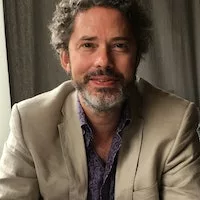
Robert Marx is co-lead for the Sussex Mindfulness Centre and leads the national Mindfulness-Based Cognitive Therapy (MBCT) in Talking Therapies in NHS services training centres collaboration. He is a clinical psychologist and psychotherapist and has been teaching mindfulness to patients and staff in the NHS for over 20 years. He mainly teaches MBCT and the SMC compassionate leadership training. He has been practising Buddhist meditation for over 30 years, initially in the Theravadan tradition and then in the Tibetan tradition but he also draws inspiration from multiple other contemplative traditions. His focus is currently on wanting to help build compassionate cultures in organisations and on strengthening intentionality and meaning frameworks for practice.
Booking
How much does it cost?
Please note, we ask all those who book a place on this course to fill in an application form here that will be sent to the facilitators.
The cost of this retreat is £200. We also offer a choice of two other options:
£150 – Supported rate, if you are on a low income and can’t afford the general admission price.
£250 – Supporting rate. You can support other participants to attend who are on a low income.
As part of our equity, diversity and inclusion policy, we also have a limited number of concessionary tickets available on a first-come, first-served basis. These are for people who are facing acute financial hardship and who would otherwise not be able to attend. To request a concession ticket please email spft.smc@nhs.net.
We are striving to make our courses accessible for all. If you have additional needs or learning styles, please let us know so we can support you.
How do I apply?
- Please request an application form from spft.smc@nhs.net, and when completed return it to the same email address. The purpose of this is to understand what we need to know to support you properly. If we have any concerns about anything in your form, we will contact you.
- On offering you a place we will issue an invoice for the full amount.
- Your place is confirmed once we receive full payment.
You can book here: