



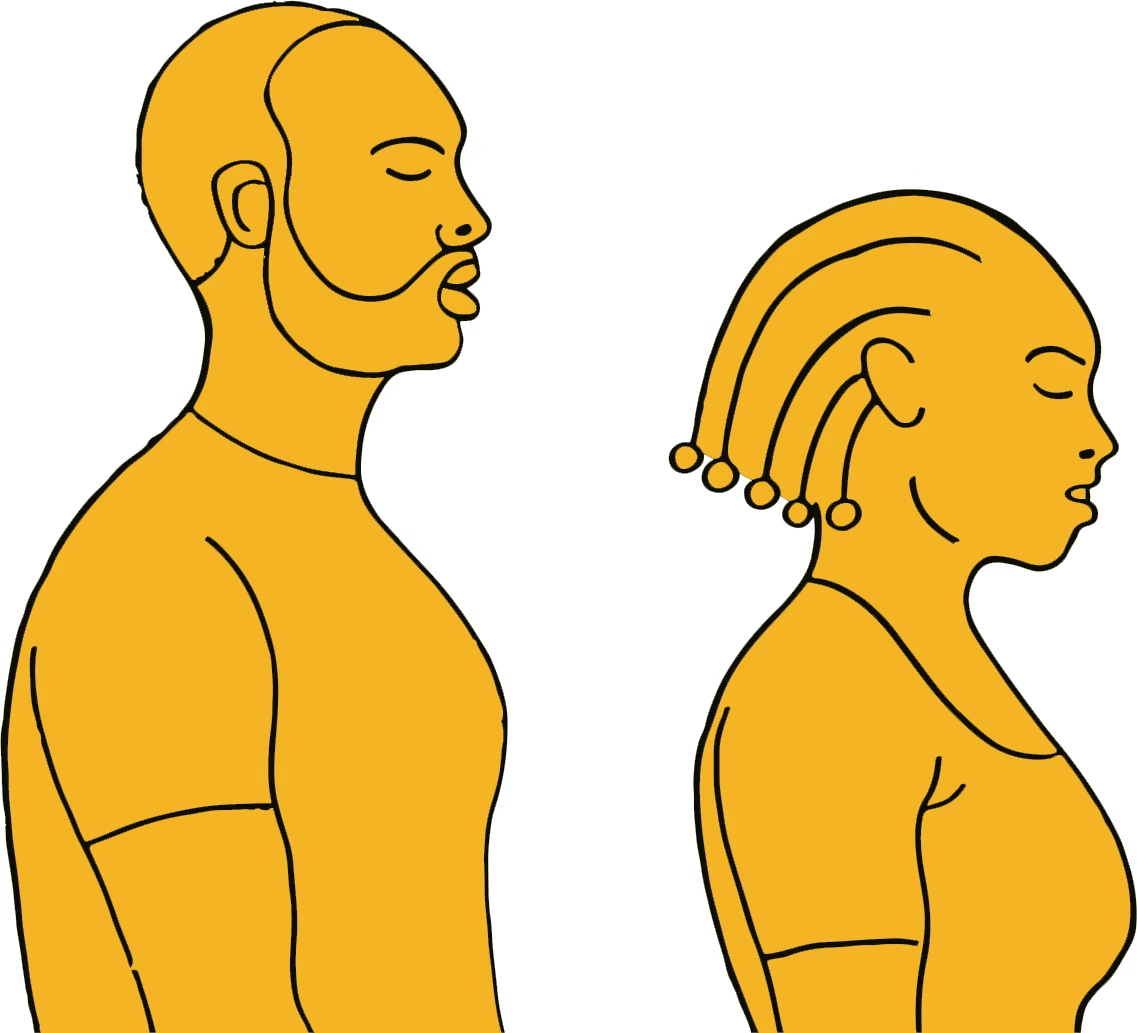

For Black History Month and Black Girl Day Off, Michelle Albert talks about the critical value of rest and pausing, going against strong cultural and parental messages that call on her to always be strong.
October is Black History Month in the UK. It’s also the month in which we mark World Mental Health Day and, less widely known, Black Girl Day Off — an initiative introduced by Tomeka Casanova in 2020, encouraging Black women to take a step back and prioritise our mental wellbeing.
At the heart of the day is a simple but important idea: prioritising our emotional wellbeing and making space for intentional rest. It’s also a welcome opportunity to address the impact of stress as a precursor to chronic illness. But what does intentional rest actually look like? And why can it feel so difficult to give ourselves permission to do it, especially when culturally, so many of us were raised to be strong. To persevere. To work hard, keep going and do it all.
The weight of always being strong
I’ve been reflecting on how early we learn these lessons, and how they can shape the relationship we have with ourselves well into adulthood. My parents taught me many things. They taught me to be kind, to work hard, to persevere and to take responsibility. My mum actively taught me to be strong. Preparing me for how exhausting it will be to just exist. The constant code switching. The micro aggressions. Fear of advocating for myself. The weight of stereotypes and judgements. I was taught to do it all, and rely on myself.

But I was never taught how to look after myself mentally. I wasn’t taught how to rest, how to self regulate, how to recognise when I was reaching my limits and how to have boundaries or how to give rest any value at all.
I don’t say any of this as a criticism of my parents. They could only pass on the lessons they were taught. They, too, inherited lessons from generations before them. When rest isn’t something you’ve been taught to prioritise, it can be difficult to recognise it as something you need, and shake off the shackles of guilt and shame that often come with taking a break.
For many Black women, this can sit alongside wider social expectations to be strong, dependable and capable of carrying the load along with a higher pain threshold. Of showing up for everyone else, even when we’re running on empty. The unspoken heaviness of just trying to exist.
Of course, no two experiences are the same, and strength is not exclusive to any one community. But it’s worth considering what happens when strength becomes an expectation rather than a choice. When being capable of carrying the load means nobody thinks to ask whether we should have to carry it in the first place.
Why does a day like Black Girl Day Off matter?
Because rest isn’t simply about taking a day off work or booking a spa treatment. It’s about recognising that our mental and physical wellbeing matter, and that we deserve care before we reach breaking point.
It’s also about acknowledging the wider context in which Black women navigate their health. The inequalities are well documented. Government data has reported that almost half (47%) of Black patients said they had been treated differently in healthcare because of their ethnicity.
And there are also longstanding concerns about racial stereotypes in healthcare. A UK parliamentary report on Black maternal health highlighted the false perception that Black women have greater pain tolerance or emotional resilience, a stereotype that can contribute to delays in appropriate care.
Data like this doesn’t tell the whole story of Black women’s health, but it is a story we should continue to speak about and acknowledge.
We cannot mindfulness our way out of discrimination, and individual self-care should never be used as a replacement for better fairer healthcare.
We can however, begin to change our relationship with ourselves. We can learn to deepen our self awareness and start to recognise our needs. Check in on ourselves, and how we’re feeling in our minds and in our bodies. Creating space to pause so we can respond to challenges rather than reacting and continually pushing through at any cost.
What mindfulness has taught me about rest
Mindfulness has been instrumental in helping me navigate grief. It’s deepened my self-awareness and helped me rebuild my relationship with myself after decades of living in a constant state of fight or flight.
It has taught me to pause. To notice what is happening in my mind and body, rather than automatically pushing through. To recognise when I need to step back, and to understand that I don’t always have to respond to every thought, feeling or demand immediately.
Perhaps most importantly, mindfulness has helped me look at rest through a different lens.
Rest doesn’t have to be something grand and take a great deal of planning. It doesn’t have to involve a retreat, a holiday or a completely free afternoon.
A rest or reset can be achieved in just a few moments. A few minutes of breathing before the day begins. A pause before joining that meeting. Sitting quietly with a cup of tea without reaching for your phone. Saying ‘no’ to something when you know you don’t have the capacity to say ‘yes’. An intentional pause interrupts autopilot and creates space to move forward with intention without carrying stress forward from the last activity to the next.
These moments may seem small, but they are opportunities to check in with ourselves. To ask: How am I actually feeling? What do I need right now?
And then, just as importantly, to listen to the answer without judgement.
Learning to give ourselves permission
I learned the hard way the true cost of continually pushing through and hyper independence. Burnout came visiting when I literally had nothing more to give.
For me, intentional rest is becoming less about escaping my to-do list and more about making sure my needs no longer feature at the bottom of it. It’s about being able to live a full life with greater awareness, compassion and balance.
This Black History Month, as we reflect on the histories, experiences and contributions of Black communities, I think it’s also worth making space for conversations about the things we have inherited, including the expectations we place on ourselves.
We can honour the strength of the women who came before us without feeling that we must carry every burden they carried.
We can be resilient and still need support. We can be capable and still need rest.
Perhaps the reset begins with something simple: giving ourselves permission to pause.
Not because everything is finished. Not because we’ve earned it.
But because we matter, too.
Michelle Albert is an Advocate for Sussex Mindfulness and Compassion. She previously wrote about her journey with mindfulness here and inclusion in the mindfulness space during Black History Month in 2025.