





A mindfulness advocate’s perspective of attending the Sussex Mindfulness & Compassion’s annual conference
Mark Maund is part of a team of advocates who volunteer at the Sussex Mindfulness & Compassion. In this post, Mark describes his experience at our 2025 conference which was themed around discovering joy. And then he warmly invites you to join us in May 2026, when we’ll be exploring compassion.
Discovering joy in troubled times
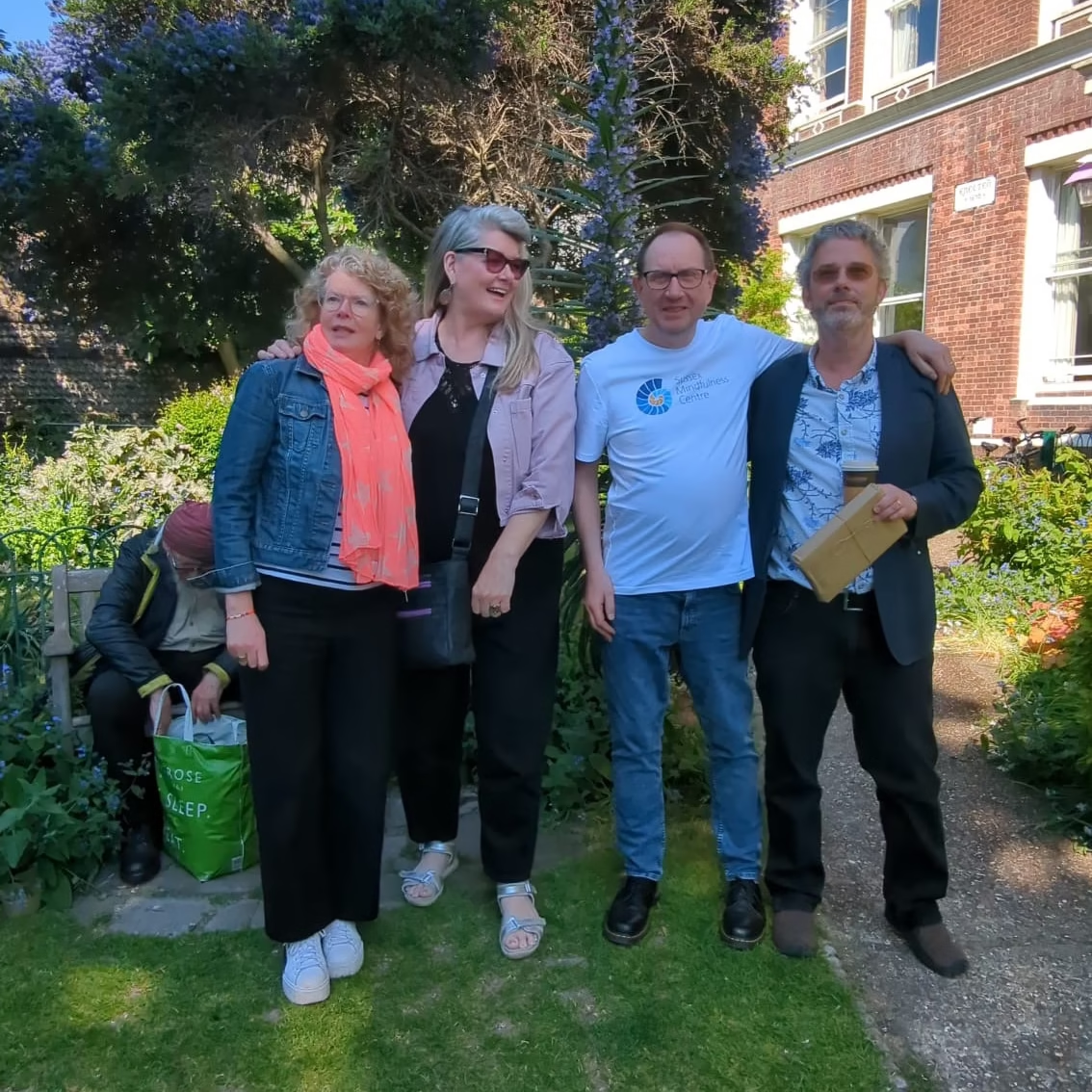
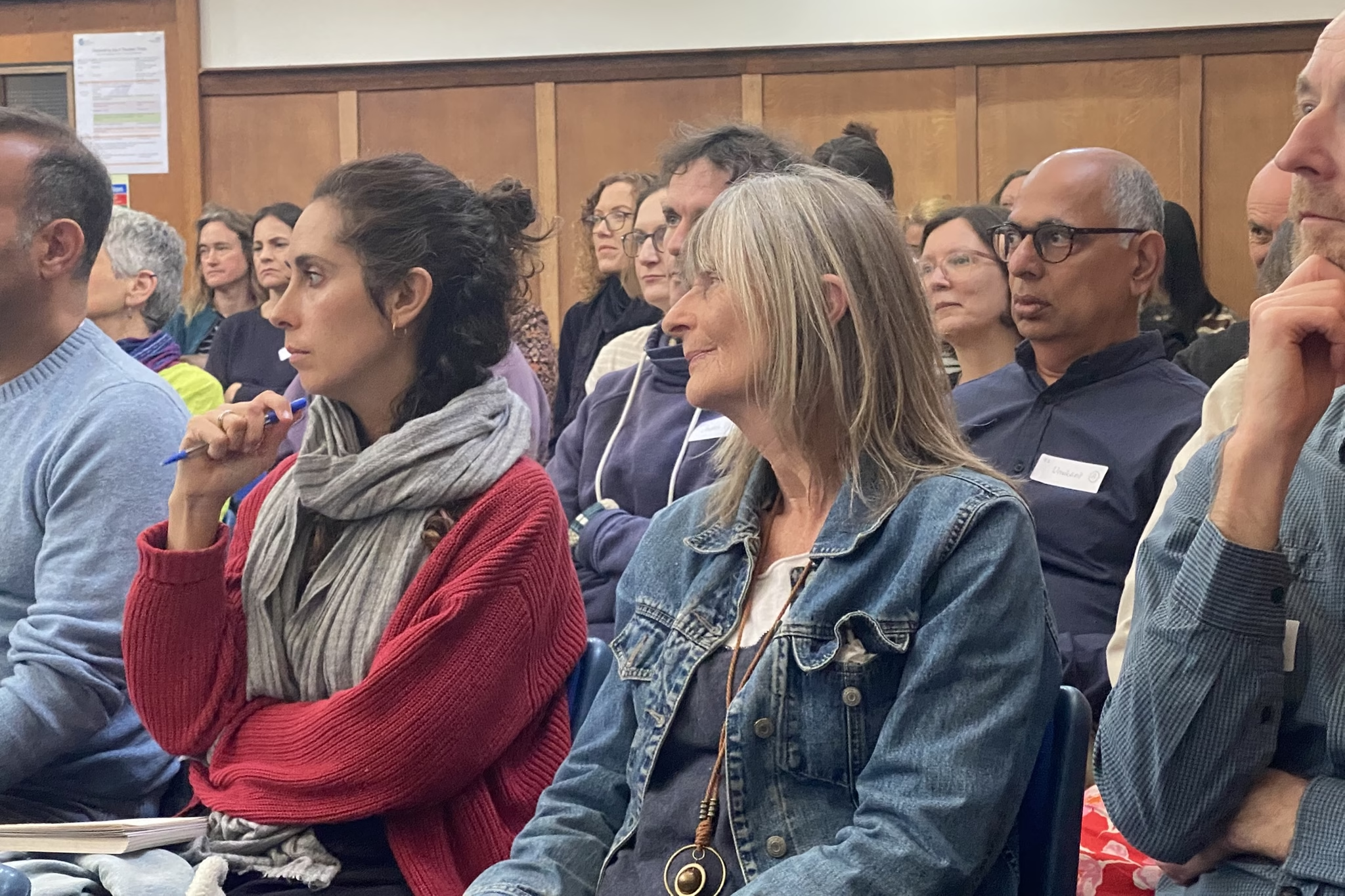
If you are curious about what happens at a mindfulness conference, let me share my experience of this year’s Sussex Mindfulness & Compassion conference in Brighton. It was not my first time there, but at every conference I have found new insights into my practice.
As a newly appointed advocate I see it as that one day of the year where we all can come together and discuss mindfulness issues in a relaxed, comforting environment. This was the eleventh annual conference, and it had an interesting theme: the need to cultivate more joy in our lives to help confront our troubled times.
I was really interested to learn more about the role of joy because when I look back at my early learning experiences with mindfulness it began for me with a journey focused on pleasantness. I found that even simple, everyday events can be noticed or appreciated better to bring more joy into my life. I’m sharing below what came up for me in spending a day exploring the subject more deeply with others. Perhaps some of my reflections will resonate with you or provoke your curiosity to find out more for yourself in May 2026 when the conference meets again.
Can we make mindfulness more playful and less formal?
My experience with mindfulness, which I know is common for many, is that it’s a practice where I can become distracted. Sometimes I get so distracted I leave mindfulness altogether. This sometimes opens the door to returning negative emotions and that can lead down a path back to possible depression or anxiety. At the conference I heard about how people suffering from depression can develop what is known as anhedonia which is a feeling that makes you not appreciate and enjoy life.
Life will feel empty and dampened down. So sometimes, despite our practice, we may feel that we simply need to break away from the restraints of formal mindfulness practices and “let in some air” for temporary relief by simply resting or having a holiday. It was interesting to think about this. And how when returning to mindfulness I could perhaps be more exploratory and playful with my practices – to think of opposite or alternative ways of practising mindfulness altogether.
Mindfulness interventions are still evolving – and that’s a good thing
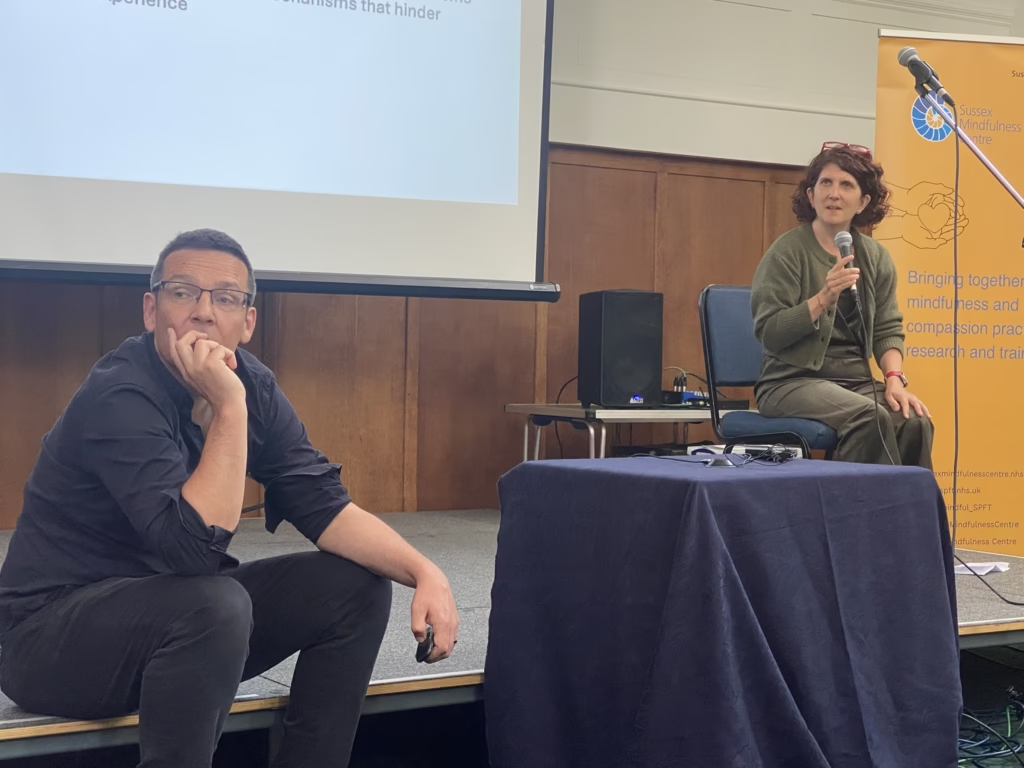
Mark Williams was a keynote speaker at this year’s conference. He developed the Mindfulness Based Cognitive Therapy (MBCT) course in the 1990s (along with Zindel Segal and John Teasdale) which has proved to be such a powerful tool for people who suffer with depression and anxiety. We also heard from Barney Dunn at Exeter University, who in particular is focused on helping people with the most persistent and treatment-resistant experiences of depression to find some relief and long-term wellbeing. Both Mark and Barney have been exploring how MBCT can be adapted and made even more effective for people. And joy was an important component for both of them.
What I learned was that in those early days of teaching the MBCT course some of the other ways to enhance our joy were missed. For example, when we go into a longer meditation (and ground ourselves) the mind often wonders. In MBCT we are trained to guide the mind back to the breath. Mark William’s work with a new course – Deeper Mindfulness, also known as “Frame by Frame” – shows that adapting a pause in this process may be beneficial to us. It allows us to show more care and appreciation of the mind and body which encourages a sense of looking out for our own welfare. And that would not be a bad idea. Another useful piece of advice I heard at the conference was that if I am struggling with my everyday life and not finding time to practise I could try several smaller practises (up to say ten minutes) to help get myself back on track.
Also helpful, was guidance about how to respond when emotions get overwhelming in a practice. I learned that people have found that even during meditations with positive emotions, they can feel overwhelmed – resulting in emotions feeling dampened-down. If that happens in a meditation, it is recommended to simply show ourselves some self-compassion and realise that it is ok to like or dislike certain emotions, and to realise the possibility that “no action is needed right now”. I find it helpful advice that I might do when things get very emotional in a meditation. I could be kind and grateful for the work that the mind does – after all it does its best!
Can mindfulness help us make the most of life’s possibilities?
Another interesting theme I heard about at the conference was that there is increasing interest in using mindfulness to help people make the most of their life opportunities. Mindfulness can help us to develop a personalised approach to managing emotions better, catering for individual needs and preferences. We learned that there may be ways to navigate through life that can be challenging, and we can learn from each other. Mindfulness can make us self-aware of our own power, self-power and we often simply need to trust ourselves. So, we can overcome and become more of who we really are. Everyday life can be challenging but we can walk alongside our challenges and not be afraid to walk a different path from everyone else. I was reminded to be proud of my true self. I would like to remember that I can always walk back to where I came from if I am feeling lost, and to get back on track.
I attended a workshop called “Finding light in the dark” which was hosted by Barney Dunn and Clara Strauss, who is Co-Lead (research) for the Sussex Mindfulness & Compassion. We explored how we might develop new learning processes of the mind to help us not get caught up in feelings that hinder positive emotional experiences. We found that by simply looking at objects in a mindful way (visually or meditatively) we can instil a feeling of joy that may later offer us new, different mindful avenues to take. This joyful practice is a way to challenge my negative emotions (seen with negative responses) and to see them in a new light.
Join us for next year’s conference on the transformational power of compassion
If you’d like to explore your mindfulness practice with some of the most experienced and innovative practitioners and researchers in the UK, and to connect with others who are on this journey, why not join us on 15 May 2026, at the Friend’s Meeting House in Brighton. The theme of next year’s conference is “Compassion: The power to transform“. The speakers will be announced and tickets go on sale 27 October 2025.