




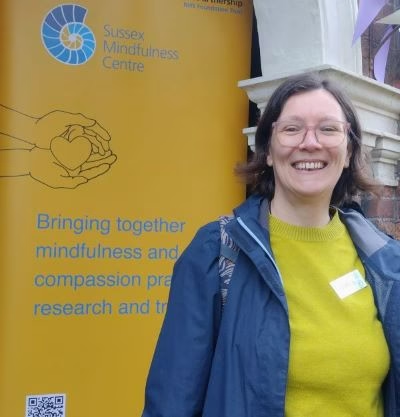
Tamsin Bishton, volunteer writer and editor, and part of the Sussex Mindfulness & Compassion community, writes about our twelfth annual conference. The report provides a flavour of the conference for those who couldn’t make it, and a happy reminder for those that did.
Open hearts and minds
The theme of this year’s Sussex Mindfulness & Compassion (SMC) annual conference was compassion and its power to transform. It was the twelfth conference the centre has held. As a participant, I felt the confidence that comes from hosting a space like this for more than a decade. That confidence – and the sight of more and more people turning up with open hearts and minds each year – was really present at the Friends Meeting House in the centre of Brighton.
The gathering promised us space to explore how compassion can help transform our own difficult experiences, tricky relationships, and challenging workplaces. It also took on crises in wider society – conflict, social inequality, and climate change. In my experience of the day, it addressed all of this with gentleness and courage. Most importantly, it didn’t avoid asking each person there to consider how compassion could show up in our actions.
Compassionate hospitality and the courage to ask hard questions
In the opening session, the Centre’s co-lead Robert Marx helped us connect with compassion, as hospitality. His welcoming talk highlighted the direct philosophical connection between mindfulness practice and the centre’s efforts to include more people in its work. He spoke about mindfulness courses being offered to refugees in Brighton and Hove, and drew the audience’s applause as he rejected ideologies that exclude people from other nations from our compassion.
Clara Strass, co-lead with Robert, then highlighted a specific piece of research the centre is leading. It aims to understand why Mindfulness Based Cognitive Therapy (MBCT) is relatively under-prescribed to people suffering depression and anxiety, despite being recommended as an effective NHS treatment by NICE since 2004. The research asks a hard question: if we have so much evidence that mindfulness works, why aren’t we offering it to more people? What are the barriers?
Clara also announced that SMC will be renaming itself as the Sussex Mindfulness and Compassion Centre in the autumn. This felt very appropriate given the theme of the day – and the way that she and Robert had opened the gathering with such a focus on compassion as action, not just feeling.
Compassionate communications and relationality
The next part of the morning centred on compassionate ways of communicating and relating. Alison Evans and Pamela Duckerin spoke in the main hall about embodied dialogue as a practice to cultivate mindfulness, compassion, and wisdom in our relationships. Their talk gave helpful structure to how we might develop this as a skill. I’ll be taking it into my mindfulness teaching, my wider working relationships, and my personal life. You can see Alison and Pamela sharing the messages they wanted participants to take home here on Vimeo.
The final part of the morning was given over to workshops. I attended Georgie Payne and Lynn Ley’s session on mindfulness as a compassionate practice for supporting others and ourselves through bereavement. For me, this unpacked in a specific way much of what Alison and Pamela had spoken about. I found it particularly helpful to be reminded that bereavement takes many forms – the death of a loved one, of course, but also dramatic, permanent, and painful change. The opportunity to connect compassionately with this inevitable aspect of our lives was both supportive and appreciated.
Compassion from the personal to the global
After a gentle lunch break watching the waves on the beach with a friend, it was time for the extended talk from Paul Gilbert. Paul is a world expert on the treatment of depression. I’m one of the probably millions of people who have benefitted from his wisdom. I was prescribed Cognitive Behavioural Therapy (CBT) for my recurring depression in 2009, and the therapist I worked with helped me connect with Paul’s compassionate approach. I believe it was the perfect preparation for starting a course of MBCT in 2010 – a life-changing experience I’ve written about before.
Paul’s talk did not disappoint. It’s impossible to summarise in a short report. I’d recommend watching it. The full video will be available on our website in June. And you can see him sharing the message he wanted people to take home here on Vimeo. The most powerful idea I took from it was that we create the world with our minds. We all know the horrors that human beings have created by cultivating hate. Paul explained the neuroscience behind this – and behind something more hopeful. Although many mind states spark motivation in us – fear, competitiveness, sexual desire – it is only compassion that motivates us to lessen the suffering of others. If we want to respond to the increased hate and suffering in our world, we must actively cultivate compassion.
The afternoon workshop seemed to align perfectly with this theme. I joined Rosalie Dores for a session based on Joanna Macy’s Work That Reconnects – a mindful approach to working with ecological grief in service of active hope and climate action. It was beautifully facilitated. I connected deeply with my own grief and anxiety about the state of the world. But I left with compassion – for myself and my fellow beings – and a renewed sense of purpose about how I might take hopeful action toward a better future.
Gratitude
I left the conference feeling completely full from the compassionate sharing and learning that had happened through the day. There is much in the world right now that can leave us feeling scared, disconnected, and negative. A gathering like this helps balance those realities. I am so grateful that the Sussex Mindfulness & Compassion exists, and has found a way to navigate the complexity of these times to continue offering all that it does.


