



How mindfulness helped me deal with difficult emotions, including suicidal thoughts
“The practice of mindfulness unexpectedly changed my life.”
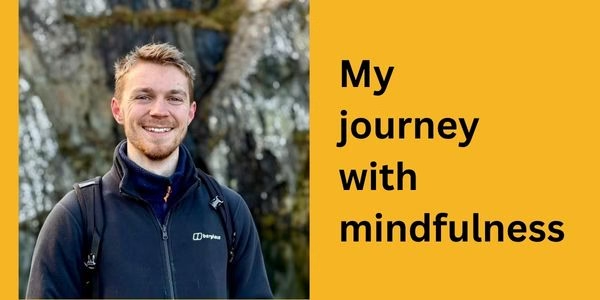
Jan Feeley, Trainee Clinical Psychologist and Qualified CBT and MBCT Therapist, describes how mindfulness helped him through his own suicidal thoughts and unexpectedly transformed his life and practice as a therapist.
This blog post came out of an interview with Jan Feeley, by film maker Sarah West for a short film. Tamsin Bishton the editor of the blog series “My journey with mindfulness”, created the post using the interview transcript, which and Jan edited to bring it up to date.
How I came to mindfulness
I was offering group therapies and learning about therapy and psychology during my Master’s Degree in Clinical Psychology. I didn’t try mindfulness because of any personal interest, but because I was told about the evidence base and that it might help me to help my future clients.
My initial impression of mindfulness was pretty negative. I couldn’t stand paying attention to my experience because I was so unhappy at the time. I felt low every day, was struggling with suicidal thoughts and didn’t really know how to sit with or deal with with my own emotions.
At that time I was offering Cognitive Behavioural Therapy (CBT) and learning about mindfulness, but I felt really uncomfortable knowing I was promoting it without having ever practiced it myself. I felt dishonest encouraging people to try mindfulness without knowing firsthand what the experience might be like. How could I ask my clients to sit, be with themselves and notice their feelings, if I wasn’t willing to try it for myself?
How mindfulness helped me personally
Not long after I began practising mindfulness out of obligation to my imagined future clients, the practice of mindfulness unexpectedly changed my life. Over the course of weeks and months mindfulness practice went from being something that felt pointless and painful to something that helped me move away from feeling low and suicidal. For the first time in years I enjoyed life, felt able to be around people, and confident enough to take steps towards building a more meaningful and fulfilling life.
I persevered from that painful point only because I felt I had to be authentic and give it a proper go; I have my clients to thank for that motivation. Within a month of almost daily practice I could feel those difficult thoughts around suicide getting slightly less intense, and I kept noticing these tiny, tiny changes in myself at different points in each day. Over time I couldn’t relate at all to how I’d felt before.
It was mindfulness practice, and the subsequent changes in how I related to my own thoughts and feelings, that first let me step away from wanting to end my life. I was able to see even the most painful thoughts as ‘just thoughts’.
As humans, I think we can be quite skilled at getting stressed and wanting things to be different. Sometimes, that leads to getting stuck feeling low and hopeless for weeks, months or even years. That common trait of human brains, to allow one negative reaction to automatically trigger many others, is what mindfulness helped me with. I was able to step out of that human tendency for a bit. It became possible to step back from my own thoughts and emotions, take a pause, and move forward with a slightly different attitude or perspective.
How mindfulness has helped me professionally
As a therapist in England, and now a Trainee Clinical Psychologist in North Wales, mindfulness has become a big part of my job. That undoubtedly comes from my own experience of feeling the impact of it for myself. Whether I’m running groups, doing one-to-one therapy, or offering supervision, I think there is almost always a place for mindfulness. Being able to have a space with someone, slow down together, and notice things in a more curious way, can make a surprisingly big difference. I really believe I couldn’t do my job without mindfulness being part of what I’m offering.
I’ve been fortunate to see changes in clients who have given mindfulness a go. Sometimes it’s really subtle, and other times less so. I remember one client who hadn’t left the house in years – and within a couple of weeks of practising mindfulness via video call, they’d left the house and seen their local area for the first time since the COVID pandemic. It varies massively, as different people want and expect different things from it. It definitely doesn’t need to reflect the change I experienced, but I find that for many people any change to how they’re experiencing a tricky time in their life and own mind, makes a big and meaningful difference to them.
People attend NHS psychology and therapy services with all sorts of things going on in their life. In NHS Talking Therapies in England, I worked with people experiencing low mood, anxiety, phobias, past traumatic events, and more. I would never force mindfulness into the work with someone, as allowing choice is so important in the therapy room, yet I often see a potential role for it if people are open to giving it a go.
My Clinical Psychology doctoral thesis looks at how people with neurodiverse conditions such as ADHD and autism experience mindfulness. I hope it will help to shed light on how mindfulness can become more accessible and meaningful for an even broader range of people, supporting them to practice in a way that works for them.
If you work in the mental health sphere and want to offer mindfulness to your clients, I would first suggest trying it for yourself. There can be pressure to educate clients and ‘give out’ interventions, but the most powerful thing a professional might do is to try it, experiment with bringing some warm curiosity to their own experience, and allow that to guide them. Then we’re not bringing an abstract prescription devoid of common humanity, but a part of ourselves that is normalising, authentic, and hopefully encouraging. Sitting with one’s self can be both possible and positive. For me, that transcends any job title and potentially offers something much more human and impactful.
__________________________________________________
If you are struggling with depression, suicidal thoughts or acute anxiety visit your doctor. There are a wide range of treatments available including, if relevant, Mindfulness Based Cognitive Therapy.
If you work in NHS Talking Therapies you may like to explore Mindfulness Based Cognitive Therapy.
If you want to flourish and thrive, rather than simply survive, perhaps give mindfulness a go. We have free online lunchtime and evening taster sessions every month, and a range of mindfulness courses to choose from.