




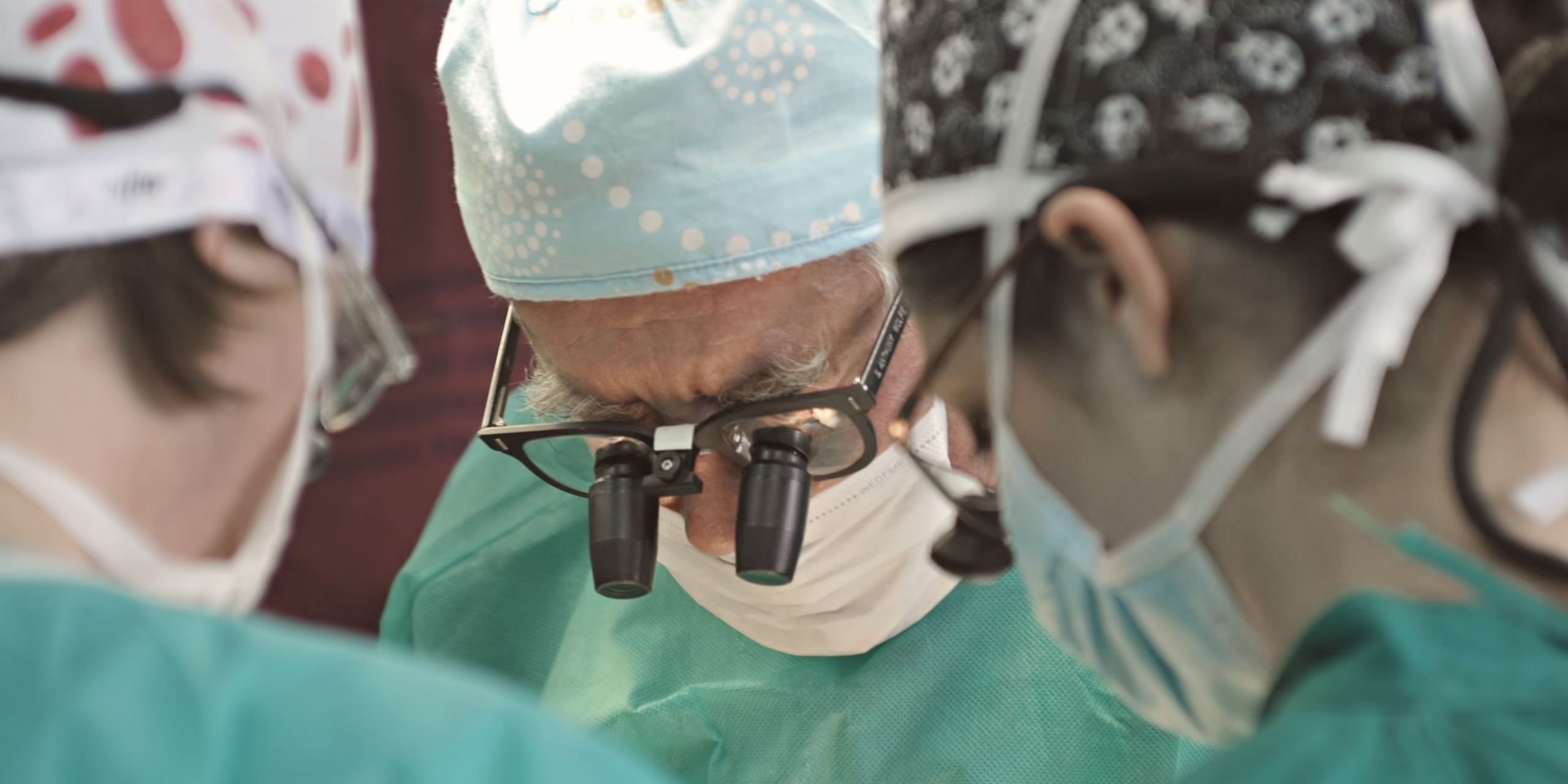
Healthcare professionals dedicate their lives to saving others, but their own wellbeing is often neglected. This post, by Dr Oliver Dale, Chief Medical Officer of the Sussex Partnership NHS Foundation Trust, explores the critical importance of supporting our medical workforce to ensure a healthier future for everyone.
The privilege and pressure of modern medicine
As a doctor, I have found it a privilege to work in a profession centred on helping others. The demands of this work have shaped my own growth and development in profound ways. Most of the time, what is asked of me feels broadly in balance with what I can manage, supported by the people and structures around me. There are times, however, when the challenges I face make me question whether I can meet them, whether I have the support I need and, occasionally, whether it is worth it. Those moments of doubt tend to come in the heat of the moment, when my capacity to think clearly feels stretched to its limit. When I am able to take a step back and regain some perspective, however, I am in no doubt. Being a doctor is a wonderful thing to do.
The emotional burden of providing care
It is perhaps an accepted view that we work in increasingly challenging circumstances. Whether that is objectively true is difficult to say, and no doubt previous generations of doctors felt similarly. What may be more important is recognising that caring for people inevitably carries an emotional burden for those providing that care. Whatever the wider context, it seems reasonable to conclude that we do not always make enough time, space or support available to care for ourselves.
The stark reality of doctor burnout
Whether or not these pressures are new, the challenges facing doctors today are well documented. Recent surveys suggest that 69% of doctors have experienced extreme tiredness that has, or may have, impaired their ability to treat patients, while 65% report experiencing moral distress through their work. Around 40% of doctors report feeling unwell due to work-related stress. These are stark figures for our profession, and they have a direct bearing on patient outcomes and experience. These are not simply individual challenges. When the wellbeing of clinicians is compromised, the effects are felt across healthcare organisations and, ultimately, by the patients and carers we serve.
Shifting from individual resilience to healthier cultures
If we want to attract, retain and support talented clinicians, we must pay attention to the conditions that enable doctors to thrive. This means looking beyond resilience as an individual responsibility and recognising it as something that develops within teams, organisations and communities. It also means exploring evidence-based approaches that help create healthier healthcare cultures in which personal wellbeing can be sustained. At a time when concerns about burnout and workforce sustainability continue to be raised nationally, this conversation has never been more important.
An evidence-based approach to systemic healing
That is why I am pleased to support the Medical Mindfulness Conference, Can We Heal Our Healthcare System? Caring for Our Doctors with Evidence-Based Practice, taking place in Brighton on 6 November 2026.
Developed by colleagues from the Sussex Mindfulness & Compassion and Sussex Partnership NHS Foundation Trust, the conference asks an important question: how can we better support doctors, whatever their specialty, to maintain compassionate, high-quality care whilst working under such intense pressure?
The role of mindfulness in this task deserves serious consideration; it is not some quirky form of meditation practised on the fringes. This is not a wellbeing event, but an opportunity to think about the workplaces we operate in and what we might do to make them healthier. The aim is to consider what colleagues need in order to step back, reflect and respond thoughtfully when faced with the most challenging and complex situations.
Learning from global perspectives in healthcare
The event brings together clinicians, researchers, educators and mindfulness practitioners from across the UK and internationally to explore practical, evidence-based approaches to supporting doctors in their working lives. Speakers will share experience and learning from the NHS as well as the USA, Mexico, India and Australia, creating an opportunity to learn from a broad range of perspectives and ideas.
We are delighted to welcome Dr Gwen Adshead as a keynote speaker. Her work on compassion, trauma and human connection has influenced clinicians across the NHS and beyond. Alongside Gwen, the programme features a faculty of speakers and workshop facilitators exploring topics including stress, compassion, help-seeking, mindful practice, workplace culture and sustainable careers in medicine.
Investing in the workforce to deliver excellent care
The day focuses on the question of what healthcare organisations can do to create environments where people can do their best work, feel valued and remain connected to the reasons they entered medicine in the first place.
I hope colleagues from Sussex and beyond will consider joining us. Investing in the wellbeing of doctors is not separate from delivering excellent patient care. The two are inextricably linked.
I look forward to welcoming you in Brighton on 6 November.
You can find out more about the conference programme, and book tickets by following this link. You can also read a post from another doctor, about how mindfulness restored his wellbeing at a time of overwhelm and burnout.
Photo credit: Dave Garcia / Pexels.com