
- Learn
-
-
Mindfulness tasters and short courses

Check out our free one-hour tasters and refreshers, and short mindfulness courses to help you get started with mindfulness.
Eight-week mindfulness courses

Book an eight-week course. We offer Mindful Self-Compassion, Deepening Mindfulness and other mindfulness-based courses.
Live sessions, workshops & retreats

To help you maintain and deepen your practice, we offer a range of free live online and in-person meditation sessions, workshops and retreats.
-
-
Home » mindfulness »
-
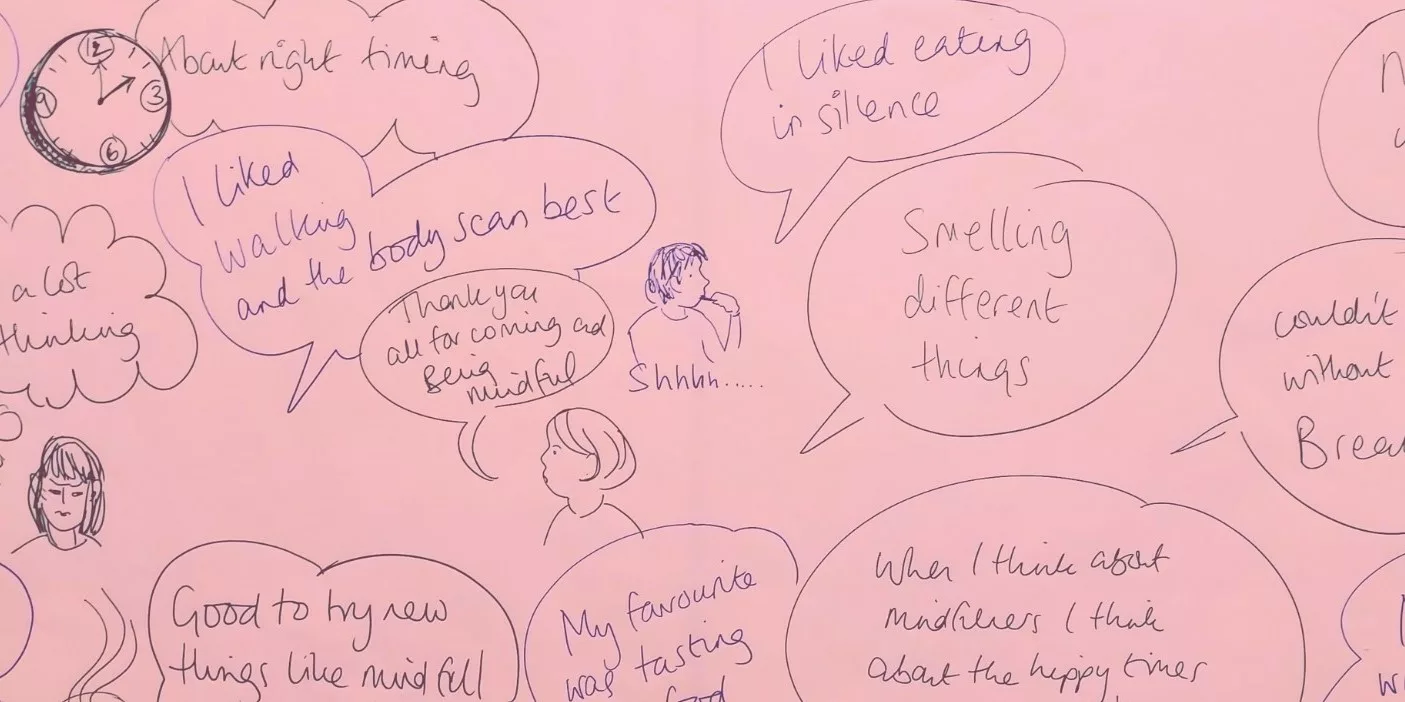
Our first one-day mindfulness retreat for people with learning disabilities
Gillian Hurren shares insights from the first one-day mindfulness retreat for people with learning disabilities, that she delivered with Celia Heneage. The retreat for Team Springwell was held at the end of the summer, in Portland House, Worthing. After meeting virtually for the last two years, it was very exciting for us to be able to deliver an in-person day retreat for Team Springwell in Worthing. The retreat was delivered by Celia Heneage and myself, both mindfulness teachers from the learning disability service. The feedback we received was very encouraging. “I really enjoyed it, it was great to actually see…
-

New mindful compassion drop-in starts in January
We have a new weekly drop-in that combines mindfulness and compassion, starting in January. The sessions will focus on qualities of kindness, emotional positivity and resilience, all key to mindfulness practice. Making time for mindfulness can be tricky when our day is packed with multiple responsibilities. Yet, being mindful can help us go through our day with more focus, calm and compassion for ourselves and others. Our free drop-in sessions are timed early in the morning or during lunch to fit in with your work schedule, and they all take place online. They are a fantastic way to add mindfulness…
-

Live mindfulness session: Wednesdays
Our drop-ins are led by experienced teachers and offer an opportunity to refresh and sustain your practice. It’s also hugely beneficial to practice with others. Join us.
-

Being thankful for small things in life
Robert Marx, Co-Lead for the Sussex Mindfulness & Compassion shares his experience of holding on to Thanksgiving traditions he learned as a child, and the benefits of being thankful for the small things in life. This week is Thanksgiving. When I lived in the United States, this was my favourite festival: a meal with family and friends like at Christmas, but without all the stress of buying presents. During the meal, everyone would say something that they were grateful for, echoing the early Pilgrims who gave thanks for the harvest and for what the year had brought. I liked this…
-

Make a New Year’s resolution to care for yourself
Those of us in the caring professions can find it hard to take care of ourselves and our own wellbeing. Whether we’re working directly with people suffering from mental health issues, or keeping the offices running and clean, we need to pause from time to time to replenish ourselves. Free mindfulness courses for Sussex Partnership staff The Sussex Partnership is one of the few Trusts that provide the NICE-approved eight-week mindfulness courses free to all its staff. There’s a reduced number of new courses starting this January, so be sure to secure your place. Or book on to one of…
-

Mindfulness teacher training information session
Whether you are interested in teaching Mindfulness Based Cognitive Therapy, Mindfulness Based Stress Reduction or adapted mindfulness-based interventions, this session will provide all you need to know about training with us.